Review of 'The Hut Six Story'
The Hut Six Story by Gordon Welchman
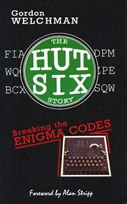 By now the secret role that Bletchley Park played in the decrypting of Axis communications during the second world war is well known but it was people like Gordon Welchman who first broke their vow of secrecy to bring the astonishing story to the public. In “The Hut Six Story” Welchman details his involvement at the Buckinghamshire manor house where a group of highly intelligent individuals was gathered to break top secret military communications with the most famous coming from the “Enigma Machine” which Welchman was key in attacking. Though widely believed to be unbreakable the team at Bletchley were able to see patterns in communications encrypted with the machine which led to devising methods to take advantage of them - For example, the fact that a letter could never be mapped to itself was a clue to how it could be cracked. Welchman explains the technical details of the work that was done here as well as how the teams were structured, the personalities of those that worked here and also provides warnings for those working in the encryption industry such as being aware that humans are apt to make mistakes in encrypting communications that can be exploited. Of course, those working at Bletchley developed early versions of computers in the form of “Bombes” - Devices that automated the decryption of communications, which are described in a fair amount of detail here with Welchman himself responsible for the “Diagonal Board” that increased the efficiency of these machines significantly.
Welchman was subject to intense scrutiny and ultimately loss his top secret NSA clearance while working at Mitre after publication of “The Hut Six Story” with elements of the book still considered by the government to be classified at the time. The book still remains a landmark in the revelations of the key role that Bletchley paid in the winning of the war by the Allies.
I found the book fairly easy to read for the most part until it gets into the logical mechanics used to decrypt the encoded Enigma traffic where to me it seems that Welchman takes a few short-cuts and makes assumptions that others may find hard to follow. For the most part I was already aware of the theory but even so following his diagrams and descriptions does take quite a bit of concentration. Several examples are used throughout the book leading to a lot of page flipping to follow the logic. I also found the author to be fairly boastful about his work but I can't tell whether this is honesty or pride – As he had to keep the secret for so long perhaps this is just his relief at being able to finally share the, admittedly significant, work he did at the park. It does, however, occasionally get a bit grating but at the same time he does willingly attribute the work done by others such as those that created the Bombes.
The edition I read omits the now largely obsolete section (?) on recommendations to the security community as it was targeted at the world of espionage in 1982 which is now long gone in the era of quantum encryption and, of course, widespread use of highly advanced computational devices. The “addendum” is a copy of the paper “From Polish Bomba to British Bombe: The Birth of Ultra” (first published in 1986) which details the role of the Polish people who the author believes to be where most of the credit for kick-starting the decryption of war time communications. The appendices are “The Bombe with a Diagonal Board” which talks about the mechanics behind Welchman's Bombe contribution, “Biographical Note” and “Publishing History”.
An interesting, perhaps essential, read for anyone interested in the history of computing, encryption, the Enigma machine or Bletchley Park. Though perhaps a bit stilted and tricky to follow in parts, it is an amazing story.
Rating: “Really good but I have some issues”
Review Date: 2026-07-18
Genre: Autobiography
Publisher: M & M Baldwin
Publication Date: 1982
ISBN: 9780947712341